What Makes a Quality Gaming T-shirt Design File and How Design 113 Fits Into Your Creative Workflow
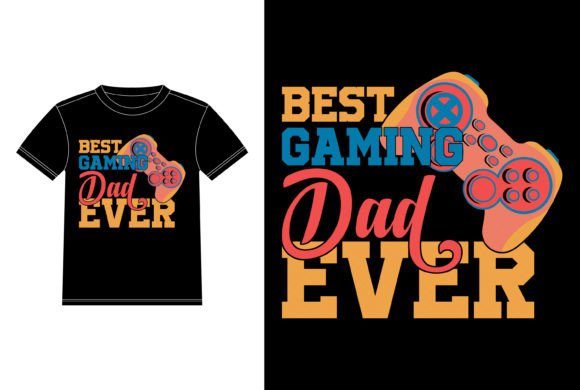
Finding the right gaming t-shirt design involves more than liking how it looks on a screen. The file structure, editability, and print readiness determine whether a design translates well to fabric or becomes a frustrating editing experience. Gaming T-shirt Design 113 represents one approach within a crowded landscape of digital apparel assets, and understanding what it offers compared with other options helps you decide whether it matches your production needs.
This article walks through the practical considerations around file formats, resolution, color flexibility, and editing capabilities. Rather than suggesting one design fits every situation, the goal is to clarify when a design like Gaming T-shirt Design 113 serves you well and when you might benefit from a different type of asset.
Understanding the Core Features of Gaming T-shirt Design 113
Gaming T-shirt Design 113 arrives as a packaged set of vector and raster files built in Adobe Illustrator CC. The 300 dpi specification matters because it ensures crisp output on physical garments without pixelation at standard print sizes. For direct-to-garment printing, screen printing, or heat transfer applications, having artwork at this resolution removes a common obstacle that delays production timelines.
The claim of 100 color-changeable elements sets this design apart from simpler alternatives that offer fixed color palettes. In practice, this means each visual component within the design can be individually recolored without affecting other parts. For print shops handling client requests like "make the helmet blue instead of red" or "match the controller color to our team branding," this flexibility reduces back-and-forth editing time significantly.
The 100 vector shapes being re-sizable addresses another practical concern. Vector artwork scales indefinitely without quality loss, so the same file works for a chest print on a small shirt and a full-back design on an extra-large garment. When you compare this with raster-only designs that become blurry when enlarged, the vector foundation provides meaningful versatility across product types beyond just t-shirts—hoodies, posters, or accessories become viable applications.
File Format Comparison: What the Included Formats Actually Mean for Your Workflow
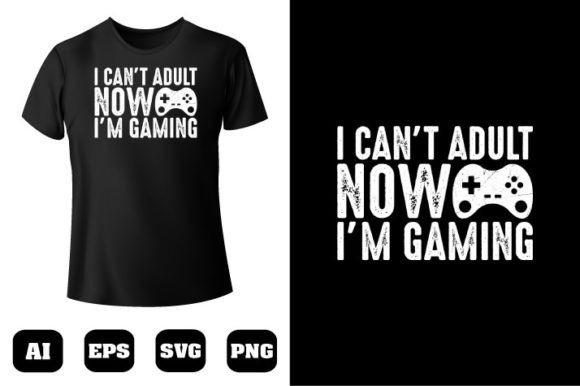
Gaming T-shirt Design 113 includes AI, EPS, PNG, and SVG files. Each format serves a distinct purpose, and having all four available changes how you approach production. Let's examine what each format brings to the table and where limitations might appear.
AI (Adobe Illustrator) and EPS Formats
The native AI file preserves full editability within Adobe Illustrator CC. Layers remain intact, effects stay adjustable, and you can modify every element without degradation. EPS functions as a universal vector exchange format that opens across various design applications, including older Illustrator versions and alternative software like CorelDRAW or Affinity Designer. For professional print shops running diverse software environments, EPS compatibility often matters more than AI-exclusive features.
A tradeoff worth noting: AI files from newer Illustrator CC versions may not open cleanly in significantly older software. If your workflow involves legacy tools or collaborators using CS6 or earlier, the EPS file becomes your primary working format, which may strip out some modern effects or layer structures.
PNG Format
The PNG serves as a quick-preview and web-ready format. With transparency preserved, you can drop it onto mockup templates without background removal work. For online storefronts showing design previews, the PNG handles that task efficiently. However, PNG is raster-based and cannot be infinitely scaled—so while the 300 dpi version works for most placements, extreme enlargements will eventually show pixelation where vector formats would not.
SVG Format
SVG files have gained importance as web and cutting-machine formats. If your production involves Cricut or Silhouette machines for vinyl heat transfers, having a clean SVG reduces file conversion steps. SVG also integrates smoothly with web-based design tools and some print-on-demand platform interfaces that prefer this format for color-separation workflows.
Comparing these four formats with designs that ship only as JPG or a single vector file reveals the practical advantage: you spend less time converting files and troubleshooting format incompatibilities across different stages of production.
Where Gaming T-shirt Design 113 Excels
Several scenarios align particularly well with the characteristics of this design file. Print-on-demand sellers who need assets that work across multiple product types often benefit from the vector-plus-raster combination. When you upload the same design to different platforms with varying file requirements, having all four formats prevents rejections or quality warnings that arise from format mismatches.
Custom apparel businesses serving gaming communities, esports teams, or streaming content creators frequently encounter color-matching requests. A design with 100 color-changeable elements handles these requests without requiring complete redesign work. The editing time saved across multiple client projects accumulates into meaningful efficiency gains over weeks of production.
Designers building a library of gaming-themed assets for seasonal collections can also leverage the re-sizable vector structure. The same base design adapted through color variations and scale adjustments generates multiple SKUs without licensing additional assets—a consideration relevant to budget-conscious small studios.
Where You May Need a Different Type of Design Asset
No single design approach covers every use case, and Gaming T-shirt Design 113 has boundaries worth understanding. For projects requiring photorealistic gaming imagery rather than illustrated vector artwork, this style of design would not substitute effectively. Raster-based composite designs with textures, gradients, and photographic elements occupy a different category with different editing demands.
If your production involves highly detailed halftone separations for simulated process screen printing, vector designs with flat color areas may underutilize the capabilities of that printing method. Simulated process excels with photographic gradients and complex tonal transitions that vector illustrations typically do not provide.
Designers seeking fully original, one-of-a-kind artwork for a premium brand identity might also find that a commercially available design—regardless of quality—does not deliver the exclusivity their positioning demands. In those cases, commissioning custom artwork or creating original designs from scratch better serves brand differentiation goals, even though the cost and time investment increase substantially.
Color Flexibility: What 100 Color-Changeable Elements Really Means
The technical capability to change 100 individual color elements deserves closer examination because it impacts editing workflow directly. In many vector designs, colors are organized into a handful of global swatches that update uniformly across the artwork. That approach works well for simple color adjustments but limits creative control when you want specific elements to diverge from the palette.
With individually editable color elements, Gaming T-shirt Design 113 allows targeted adjustments. You might keep the main character artwork in its original tones while recoloring background elements to match event branding, or adjust weapon glow effects independently from armor colors. This granularity matters when clients request nuanced changes rather than blanket color shifts.
However, 100 editable color elements also means 100 decisions if you choose to customize extensively. The editing process becomes more involved than designs with five or six global color swatches. For production environments focused on speed and minimal customization, simpler color structures might actually serve better. The right balance depends on whether your typical projects demand detailed color control or efficient batch processing.
Resolution and Print Quality Considerations
The 300 dpi specification in Gaming T-shirt Design 113 aligns with industry standards for apparel printing. Most direct-to-garment printers, screen printing film outputs, and heat transfer processes expect artwork at this resolution for optimal results. Lower-resolution files create soft edges and visible pixelation that look unprofessional on finished garments.
An aspect sometimes overlooked is that resolution matters differently for vector and raster elements. Since the AI, EPS, and SVG formats are vector-based, they remain resolution-independent regardless of the stated 300 dpi. The PNG file, however, is fixed at 300 dpi at its native dimensions. If you need to scale the PNG beyond roughly 120% of its original size, you may notice quality degradation that the vector formats would avoid entirely.
For production workflows that rely heavily on PNG placement in mockup software or design comps, understanding this distinction helps you choose the right source file for each step. Using the vector formats for final output and the PNG for quick visual references represents a practical division of labor across the included file types.
Editing Accessibility and Learning Curve
Gaming T-shirt Design 113 is built in Adobe Illustrator CC, which sets a baseline for editing requirements. If you or your team work regularly in Illustrator, the AI file opens with full editability and minimal friction. The learning curve centers on Illustrator proficiency rather than design-specific complexity.
For users reliant on free or lower-cost alternatives like Inkscape, the SVG and EPS files provide access points, though compatibility varies. Some Illustrator effects may not translate perfectly to other vector editors, and certain editable properties might simplify or disappear during format conversion. Testing compatibility with your specific software setup before committing to production timelines reduces unexpected complications.
Beginners approaching apparel design for the first time may find the full editability of 100 vector shapes somewhat overwhelming compared with designs that offer limited but guided customization. That said, the availability of multiple formats means you can start with simpler edits in the PNG file using raster editing software and gradually work toward more sophisticated vector modifications as skills develop.
Practical Decision Factors When Evaluating Gaming T-shirt Designs
When you compare Gaming T-shirt Design 113 with other gaming-themed apparel graphics, several practical factors help determine fit. Consider whether your primary need is print-ready speed or editable flexibility. Some designs prioritize drag-and-drop simplicity with minimal customization options, trading editability for immediate output. Others emphasize deep editability at the cost of additional time spent in design software.
Think about your most common production scenario. Are you printing one-off custom orders where each design gets individual attention, or are you producing bulk runs where you set up the artwork once and replicate it across hundreds of units? The editing investment in 100 color-changeable elements pays off more clearly in the one-off custom scenario, where each order potentially requires unique color adjustments.
Evaluate your software environment honestly. A robust AI file only delivers its full value if you can open and edit it effectively. If your workflow centers on browser-based tools or mobile apps, the PNG and SVG files may carry more practical weight than the AI and EPS formats in day-to-day use.
Also assess whether the visual style of the design aligns with your audience expectations. Gaming aesthetics range widely—from retro pixel art to hyper-detailed illustrations to minimalist iconography. A design that fits one sub-community within gaming culture may not resonate with another, regardless of its technical file quality.
Building a Versatile Design Library
Many apparel creators maintain collections of design assets rather than relying on individual purchases for each project. In that context, Gaming T-shirt Design 113 represents one component of a broader library that might include designs with different styles, color structures, and format profiles. The value of any single design partly depends on how it complements existing assets and fills gaps in your creative options.
Designs with strong re-sizable vector foundations, comprehensive format coverage, and granular color controls tend to serve well as library cornerstones because they adapt across multiple projects without becoming stylistically repetitive—color variations alone can sustain several product listings from one base design.
The inclusion of multiple formats also future-proofs your asset library against software transitions. If you move between design tools or adopt new production equipment with specific format requirements, having AI, EPS, PNG, and SVG files available reduces the need for format conversion tools or re-purchasing assets in compatible formats.
Making an Informed Choice
Gaming T-shirt Design 113 offers a technically capable package with vector editability, high resolution, extensive color control, and multi-format coverage. These characteristics align well with custom apparel production, print-on-demand selling, and design work that demands flexibility across different output scenarios.
The decision to use this particular design—or any commercially available gaming t-shirt graphic—depends on matching its strengths to your specific production requirements. If granular color control, format versatility, and scalable vector artwork address recurring challenges in your workflow, the design warrants consideration. If your projects demand photographic realism, extensive halftone work, or fully exclusive artwork, exploring other resources alongside this option creates a more complete picture of what best serves your needs.
Taking time to examine the file specifications, test compatibility with your software environment, and assess how the design fits into your typical production sequence leads to more confident purchasing decisions and fewer workflow interruptions down the line.