I'd Rather Be Gaming T-Shirt: How to Get a Print-Ready Design That Actually Works
You’ve seen the phrase everywhere—on mugs, hoodies, tote bags, and especially t-shirts. “I’d rather be gaming” isn’t just a funny statement, it’s a lifestyle badge for millions. Whether you’re a small business owner adding a new item to your store, a crafter making gifts for a gaming group, or a streamer building your own merch line, having a crisp, professional design file makes all the difference. But many people jump in, buy a cheap download, and end up with blurry prints, wrong colors, or a file they can’t even open. This guide walks you through what the I’d Rather Be Gaming T-Shirt design bundle really is, the hidden pitfalls that waste your time and money, and exactly how to avoid them so your finished product looks like it came from a premium brand.
What’s Inside a Good I’d Rather Be Gaming Design Bundle
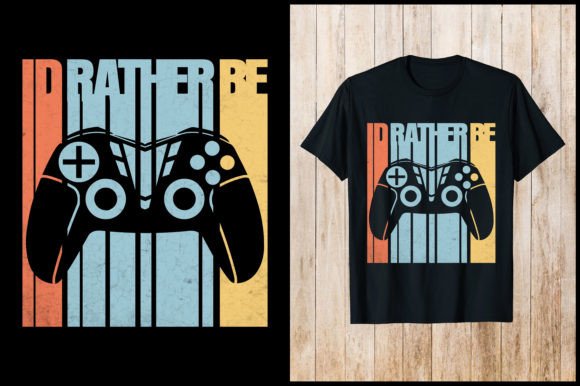
When you buy a quality gaming-themed graphic pack, you’re not just getting one picture. A proper bundle meant for print-on-demand or heat pressing usually includes multiple file types to fit almost any software or printing method. For the ID RATHER BE Gaming T-Shirt design, you should expect to receive an AI file (Adobe Illustrator), an EPS file (vector), a high-resolution PNG with transparency, and often an SVG cutting file for craft machines like Cricut or Silhouette. Some sellers also throw in a sublimation-ready PNG or JPEG for mugs and pillows.
The artboard size mentioned—4500 x 5400 pixels—is a huge clue. That’s a 15×18 inch canvas at 300 DPI, which means the design can scale up cleanly for an XL tee or down for a small phone case without losing sharpness. This isn’t just a random number; it’s your insurance against fuzzy prints. Cheap packs often give you a tiny 1000px image that falls apart the moment you try to enlarge it. Always check the native resolution before buying.
The Biggest Mistake People Make With Gaming Sublimation Files
Sublimation printing is wildly popular for all-over t-shirt prints, mugs, and pillow cases. It’s also where most beginners trip up. They download a Gaming Sublimation Bundle, see a beautiful bright design on screen, and then wonder why the shirt comes out of the heat press looking dull or with a yellowish cast.
Why Your Colors Look Wrong on a Mug or Shirt
The issue usually isn’t the design’s quality but a misunderstanding about color profiles. Sublimation inks use CMYK, while your screen displays in RGB. If you take that RGB PNG and send it straight to your printer without converting color spaces, the neon greens and electric blues that pop on your monitor turn muddy. The fix is simple: open the file in a graphics program, convert to CMYK, and preview what it will actually look like. A slight shift is normal, but you can adjust brightness and contrast to compensate. For dark fabrics, remember that sublimation only works on light-colored polyester; for cotton black tees, you’ll need a completely different process like heat transfer vinyl or direct-to-garment printing.
Ignoring the Transparency Edge
Another common blunder when using Gaming PNG files for sublimation or t-shirt design is forgetting what happens around the edges of the artwork. A PNG with a transparent background is fantastic for placing over a photograph or colored garment, but if the design fades out softly or has intentional shading, that edge might print with a subtle white halo on dark substrates. Always do a test print on similar material. You might need to add a slight stroke or clean up the mask by a pixel or two. Small corrective steps prevent a whole batch of shirts from looking amateurish.
Vector or Raster: The Hidden Decision That Haunts Every Print Project
If you’re using the design for cutting heat transfer vinyl or resizing it massively for a banner, nothing beats a vector file. The EPS file and AI file included in the bundle are your golden tickets. They let you scale the I’d Rather Be Gaming T-Shirt graphic to any size with zero quality loss. Yet a surprising number of buyers only use the PNG and then wonder why the text looks jagged when blown up for a car decal.
Vectors aren’t just for resizing. They separate elements onto layers or groups, making it easy to change colors, remove parts, or combine with other graphics. Maybe you want to replace “Gaming” with your Twitch channel name. With the AI file, you can match the font and style perfectly. With a flattened PNG, you’re stuck.
Pitfall example: A small business owner downloads the Gaming Vector pack, opens it in free software that can’t read AI files, and assumes it’s broken. They use the low-res preview image instead, resulting in customer complaints and returns. The solution? Know your software. Inkscape can open basic EPS files; for AI, you often need Illustrator or a compatible alternative. If you don’t have those, SVG cutting files are the most versatile option because they work with a huge range of free and paid programs, from Cricut Design Space to Affinity Designer.
Licensing Confusion That Can Get Your Store in Trouble
Many people buy a Gaming Shirts Sublimation Bundle thinking they can do anything with it—sell printed shirts on Etsy, use it in a logo, modify it slightly and claim it as their own. That’s a dangerous assumption. Most design packs come with a personal use license by default. If you’re running a small business, you need a commercial license. Even then, there might be restrictions: you can sell physical products like printed tees, but you can’t resell, share, or even gift the digital files themselves. And you almost certainly can’t incorporate the design into a trademarked brand logo.
Before clicking buy, scroll down and read the license terms carefully. Look for phrases like “free commercial use” or “limited to 100 items.” Misusing a Gaming Graphic not only risks a takedown notice but could hurt your reputation if a customer discovers the design isn’t uniquely yours. For creators and marketers building merchandise for a brand, spending a little more on an extended commercial license or hiring a designer to create an exclusive version is often worth the peace of mind.
Practical Checks Before You Send the I’d Rather Be Gaming Design to Print
Let’s say you’ve downloaded the files and you’re ready to make a t-shirt, mug, or pillow. Before you hit that “print” or “cut” button, run through these quick checks. They’ll save you from wasted blanks and ruined evenings.
- Artboard dimensions vs. product size. The 4500x5400px canvas is generous, but if your t-shirt has a printable area of 12×16 inches and you’re dropping the design in without scaling, parts of the design might get cropped. Always set your workspace to the exact dimensions recommended by your print provider.
- Background removal. Even if the PNG has transparency, sometimes a faint white background lurks. View the file on a dark-colored background in your editor to spot any stray pixels.
- Font outlines. If you open the AI or EPS file and get a missing font warning, you need to fix that before exporting. The included text should ideally be converted to outlines, but not all sellers do this. If it’s not outlined, you’ll need the same font installed on your system, or the text will default to a basic typeface.
- Mirroring for sublimation. For anything other than a mug, you usually need to mirror the image before pressing. It’s a simple checkbox in your printing settings, but forgetting it means a backward design on your final product.
- Test on similar fabric. Cotton vs. polyester, light vs. dark—each combination handles ink and heat differently. A quick test press on a scrap piece of cloth or an old t-shirt can reveal bleeding, color shift, or lack of adhesion.
Why “One Size Fits All” Doesn’t Work for Gaming Merch
People often assume a single Gaming Sublimation Png will look great on every product. That’s rarely true. A design optimized for a black cotton tee might need a white underbase layer to make colors pop, while the same file printed on a white mug could look perfectly vibrant without any base. The shape also matters: a rectangular graphic that sits beautifully across a chest might look awkward when forced onto a tall, narrow pillow case. You may need to rearrange the elements, stack the text differently, or add a complementary background pattern for certain items.
This is where having the vector and cut files becomes essential. With the Gaming Silhouette or separated elements, you can easily rebuild the composition for a coffee mug without distorting the typography. Many professional printers also prefer an EPS or AI file over a PNG because they can fine-tune separations for screen printing. Knowing when to use which file type is a skill that elevates your products from home-craft to premium quality.
Getting the Most Value From Holiday and Event Merch
The “I’d rather be gaming” idea shines during gaming events, birthdays, Father’s Day, or cozy winter holidays. People love giving gaming-themed shirts and accessories as gifts. If you’re selling or giving away these items, plan your designs early. A Gaming Day bundle often includes matching elements for different products—a cap design, a mug wrap, a pocket decal. Instead of creating each from scratch, you can use the bundle’s variations to create a cohesive set that looks intentional.
One overlooked tactic is to layer the Gaming Eps artwork with custom names, gamer tags, or dates. Since the vector files are easy to edit, you can offer personalized t-shirts with “John would rather be gaming” in the same style. This small customization justifies a higher price point and reduces the “everyone has this same shirt” fatigue. Customers feel the product is made for them, not just a generic download.
When a Cheap Download Isn’t Really Cheap
A $3 design pack might seem like a steal, but if it’s missing key file formats, has a sloppy silhouette, or contains unlicensed elements, the eventual cost is much higher. You might spend hours trying to clean up jagged edges, trace a fuzzy PNG into a vector, or redo the typography because the file’s layers were flattened. Compare that to a professionally prepared ID RATHER BE Gaming T-Shirt Design bundle that arrives with layered, correctly named files, a high-res preview, and clear instructions. The time you save alone often covers the price difference. As a creator or entrepreneur, your time is the most expensive resource.
For crafters using cutting machines, an SVG Cutting Files pack that hasn’t been optimized will have too many nodes, causing jerky cuts or torn paper. A well-made one will have clean, simplified paths. Don’t be afraid to zoom in and inspect the design in your software before committing to a project. A smooth curve and sharp corner on screen shouldn’t change when you send it to cut.
Building a Reusable Workflow for All Your Print Items
Once you understand how to handle this specific gaming design, you can reuse the same workflow for any Print items you create later—t-shirts, mugs, pillows, tote bags, or even phone cases. Develop a folder structure where you keep the original files untouched, a working folder where you can modify colors and sizes, and an export folder with production-ready versions labeled by product type. This simple habit prevents you from accidentally overwriting the master artwork and makes it easy to reprint a successful design six months later.
When you receive a new bundle, immediately open each file type to make sure it imports correctly. Check the AI and EPS for missing fonts, open the PNG at 100% zoom to verify sharpness, and test the SVG in your cutting software. This five-minute routine can spare you a midnight panic before a craft fair deadline.
The I’d Rather Be Gaming T-Shirt concept resonates because it’s honest and playful. By choosing the right design files, reading licenses, respecting color management, and preparing your artwork specifically for each product, you turn that simple phrase into a polished, saleable piece that buyers love to wear. Whether you’re a hobbyist making a one-off gift or a marketer scaling an online store, attention to these small technical details keeps your reputation strong and your inventory moving.