Unlocking the Power of Gaming T-Shirt Design: A Complete Guide to Vector-Ready Apparel Artwork
Few things bridge the gap between digital entertainment and personal identity quite like a well-designed gaming t-shirt. Whether you're a streamer, an esports enthusiast, or someone who simply wants to celebrate a favorite pastime, the apparel you wear tells a story. At the heart of every standout gaming t-shirt lies a carefully crafted design file — one that's built to scale, adapt, and print flawlessly across countless products. This guide explores the world of gaming t-shirt design in depth, with special attention to what makes a premium editable asset like Gaming T-shirt Design 93 a genuine asset for creators, small business owners, and print-on-demand sellers alike.
What Exactly Is a Gaming T-Shirt Design?
At its simplest, a gaming t-shirt design is a piece of digital artwork created specifically for apparel decoration. However, the term covers significantly more ground than a casual observer might assume. These designs range from minimalist pixel art homages to elaborate character illustrations, competitive gaming motifs, controller silhouettes, headset-inspired typography, and neon-soaked cyberpunk compositions that echo the aesthetic of popular gaming titles.
The key distinction between a generic graphic and a professional gaming t-shirt design lies in its production-readiness. A proper design file doesn't just look good on screen — it's purpose-built for heat transfer vinyl, direct-to-garment printing, screen printing, or sublimation. That means clean separations, solid color areas where needed, transparent backgrounds, and file types that printing services and software recognize instantly.
The Rise of Gaming Culture in Everyday Fashion
Gaming has evolved far beyond a niche hobby. With billions of active players worldwide and esports events filling arenas that once hosted traditional sporting competitions, gaming culture now permeates mainstream fashion in tangible ways. Major clothing brands collaborate with game publishers. Streetwear labels incorporate gaming iconography. Independent designers build entire businesses around gaming-themed merchandise.
This cultural shift means the demand for high-quality gaming t-shirt designs has never been greater. Fans want apparel that feels authentic to the gaming experience — bold graphics, dynamic compositions, and visual references that resonate with fellow players. For designers and entrepreneurs, this represents a genuine opportunity to connect with an engaged, passionate audience.
Understanding Gaming T-Shirt Design 93: What Sets It Apart
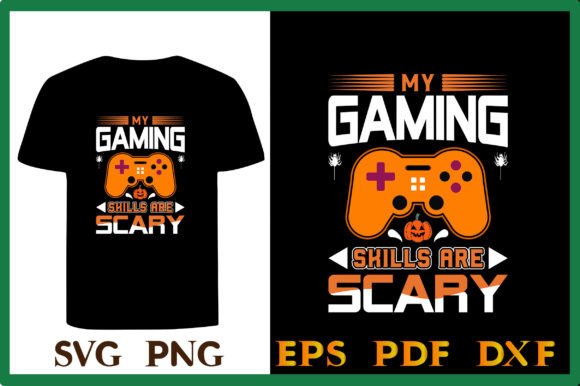
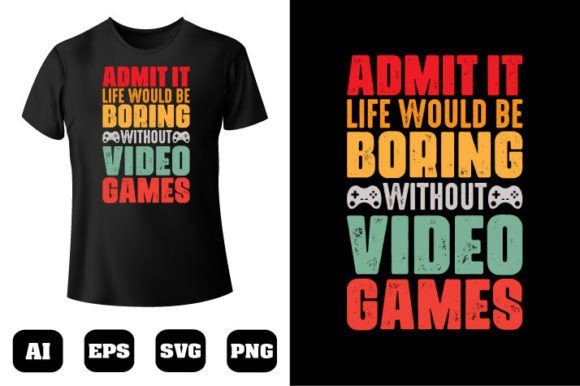
Within the broader landscape of gaming-themed artwork, Gaming T-shirt Design 93 represents a specific, polished asset crafted with professional-grade flexibility in mind. While the exact visual composition may vary across marketplaces, designs in this category typically feature striking gaming-related imagery — think futuristic warriors, digital landscapes, or stylized hardware elements — arranged in a balanced composition suitable for front-chest or full-front placement on t-shirts.
What genuinely distinguishes a numbered design asset like 93 from a random JPEG found online is the underlying file structure. This isn't a flattened, single-layer image that falls apart when resized. It's a meticulously organized vector document, built in Adobe Illustrator CC, where every element remains fully editable and infinitely scalable.
Why Adobe Illustrator CC Matters for T-Shirt Design Files
You might wonder why the software specification matters when you're simply looking for a cool graphic. The answer lies in how printing works. Adobe Illustrator CC creates vector graphics — mathematical representations of shapes, lines, and curves — rather than pixel-based raster images. Vector files maintain crisp edges at any size, from a small chest logo to a massive back print stretching across a 3XL tee.
When a design is built in Illustrator CC, the native AI file preserves layers, color swatches, and editable text elements. This means you can open the file, select individual parts of the design, change stroke weights, adjust gradients, or completely recolor the artwork without losing any sharpness. For anyone serious about customizing gaming apparel, this level of control isn't a luxury — it's practically essential.
Decoding the Technical Specifications: 300 DPI and Vector Shapes
Two specifications appear frequently in professional design listings: 300 DPI and 100 vector shapes resizable. Understanding these terms helps you evaluate whether a design asset is genuinely worth the investment or merely dressed up with technical-sounding language.
What Does 300 DPI Actually Mean for a Vector File?
DPI, or dots per inch, traditionally applies to raster images — photographs, scanned artwork, or digital paintings built from pixels. A 300 DPI raster file contains enough pixel density to print cleanly at its intended physical size. For vector files, DPI is somewhat of a conceptual specification. What the seller is really communicating is this: when the vector artwork is exported to a raster format like PNG for printing, it generates a crisp, detail-rich 300 DPI image at the specified print dimensions. This ensures the design looks professional when transferred onto fabric, with no visible pixelation or blurry edges.
The Value of 100 Vector Shapes
When a design boasts 100 vector shapes resizable, it's highlighting the compositional complexity and editability of the artwork. Every shape, highlight, shadow element, and decorative detail exists as an independent vector object. You can select a single star, a specific gear, or an individual character element and resize it, move it, or change its color without affecting anything else in the composition. This modularity is incredibly valuable when you need to adapt a design for different product types — perhaps enlarging a central element for a hoodie back print while keeping peripheral details scaled for the front pocket area.
100 Color Changeable: The Flexibility of Full Customization
One of the most practical features of a well-built gaming t-shirt design is 100 color changeable functionality. This doesn't necessarily mean the design contains exactly 100 distinct colors. Rather, it means the entire color palette within the design can be modified to suit your specific needs. Want to shift a blue-and-purple gaming motif to green-and-gold to match an esports team's branding? You can. Need to simplify the palette to two colors for cost-effective screen printing? The source file makes that trivially easy.
This color flexibility is especially important in apparel decoration because different printing methods impose different color limitations. Screen printing charges per color, so reducing a design from seven colors to three can dramatically lower production costs. Direct-to-garment printing can handle full-color artwork, but vibrant neon shades may not translate perfectly onto dark cotton. Being able to adjust every hue in the design gives you complete control over the final product's appearance and production economics.
Exploring the File Formats: AI, EPS, PNG, and SVG
A comprehensive design package typically includes multiple file formats, each serving a distinct purpose in your workflow. Understanding when to use each one saves time, prevents compatibility headaches, and ensures your final printed t-shirt looks exactly as intended.
- AI (Adobe Illustrator): This is the native, fully editable source file. Open it in Illustrator CC to access layers, manipulate individual shapes, adjust text, and export versions tailored to specific printers or platforms. If you plan to significantly modify the design, the AI file is your starting point.
- EPS (Encapsulated PostScript): A widely compatible vector format that opens in various design applications, including CorelDRAW and Affinity Designer. EPS files preserve vector scalability and are frequently accepted by professional printing services that may not use Adobe software.
- PNG (Portable Network Graphics): A raster format with lossless compression and — critically — support for transparency. The PNG included in a design package is typically a high-resolution export with the background removed, ready for quick mockup placement or uploading to print-on-demand platforms that prefer raster formats.
- SVG (Scalable Vector Graphics): An open-standard vector format ideal for web use and compatible with cutting machine software like Cricut Design Space and Silhouette Studio. SVG files are also increasingly used in print workflows and can be edited in many free and open-source vector editors.
How Gaming T-Shirt Designs Fit Into the Print-on-Demand Ecosystem
The rise of print-on-demand services — platforms like Printful, Printify, Redbubble, and Teespring — has transformed how gaming merchandise reaches consumers. Instead of bulk-ordering hundreds of screen-printed shirts and hoping they sell, creators can upload a design, connect it to a product listing, and only produce items when a customer places an order.
For this model to work smoothly, your design file needs to meet specific requirements. A 300 DPI PNG with a transparent background is the standard upload format for most platforms. The design should fit within the printable area specified by the provider, and colors should be in the sRGB color space for predictable on-screen previews. Having the editable AI source file means you can export versions optimized for each platform's unique specifications without degrading quality through repeated saving.
Practical Applications Beyond Basic T-Shirts
While the name suggests t-shirts as the primary canvas, a versatile vector design opens doors to a much wider product range. The scalability of vector artwork means the same design that looks great on a cotton tee can be scaled down for a phone case, adjusted for a hoodie front, or rearranged as a sleeve print. Consider these practical applications:
- Hoodies and sweatshirts — enlarge the central graphic for a bold back print while keeping a simplified version for the front chest.
- Tank tops and racerbacks — adjust the composition to work within narrower printable areas.
- Accessories — isolate specific design elements for hats, beanies, tote bags, or laptop skins.
- Streaming merchandise — coordinate the design across mugs, stickers, and apparel for a cohesive brand presentation.
Common Misunderstandings About Editable T-Shirt Designs
Several assumptions about gaming t-shirt design files can lead to disappointing results if not addressed early. Let's clarify a few points that frequently confuse newcomers.
Myth: "If I buy the design, I automatically own full commercial rights." In reality, licensing terms vary by seller. Some designs come with standard commercial licenses allowing you to sell printed products. Others may restrict the number of units, prohibit use on certain platforms, or require attribution. Always review the license terms before integrating a design into your merchandise lineup.
Myth: "A vector file means I can open it in any program." While EPS and SVG formats are widely compatible, AI files specifically require Adobe Illustrator or software that supports the AI format. If you're working with free tools like Inkscape, stick to SVG and EPS files, and be prepared for potential layer structure differences.
Myth: "300 DPI always guarantees sharp prints." The DPI value only matters in relation to physical print size. A 300 DPI image that's 3 inches wide won't magically print sharply at 12 inches wide. Vector files avoid this problem entirely because they're resolution-independent, but exported raster files still need appropriate pixel dimensions for the intended print area.
Design Trends Shaping Gaming Apparel in 2024 and Beyond
Gaming t-shirt aesthetics continuously evolve, driven by game releases, streaming culture, and broader fashion trends. Understanding these currents helps you select or modify designs that resonate with contemporary audiences. Currently, several visual directions dominate the space:
Neo-retro pixel art continues to perform strongly, tapping into nostalgia while feeling fresh through modern color palettes and composition techniques. Cyberpunk and synthwave influences — neon grids, sunset gradients, chrome textures — remain popular across gaming communities. Minimalist iconography appeals to players who prefer subtle references over loud graphics. Esports-inspired bold typography with geometric framing works well for competitive gaming audiences. A design asset that supports full color customization can be adapted to fit any of these trending styles.
Getting Started with Your Own Gaming T-Shirt Designs
If you're inspired to start creating or customizing gaming-themed apparel, the path forward is remarkably accessible. Begin by acquiring a professionally built design file that includes AI, EPS, PNG, and SVG formats. Familiarize yourself with the layer structure in Adobe Illustrator or your preferred vector editor. Experiment with the 100 color changeable feature to understand how palette shifts transform the mood of the artwork. Export test PNGs at 300 DPI and upload them to print-on-demand mockups to preview how the design looks on actual garments.
Pay attention to how the design interacts with different fabric colors. A graphic that pops on white may get lost on charcoal or navy unless you adjust contrast and saturation. Use the editable vector shapes to tweak composition balance for different product templates. Over time, you'll develop an intuitive sense of what works and what doesn't, building a collection of merchandise that genuinely connects with gaming audiences.
For those interested in exploring premium assets, creators who produce designs like Gaming T-shirt Design 93 often release entire series of complementary artwork. Following a designer whose aesthetic aligns with your brand means you can maintain visual consistency across multiple products — an important factor in building recognition and trust with customers.
Final Thoughts: Why Quality Design Files Matter
The difference between a t-shirt someone wears once and a t-shirt that becomes a wardrobe staple often comes down to subtle factors — the sharpness of the print after multiple washes, the way colors hold up on dark fabric, the overall balance of the composition on the body. Starting with a high-quality, vector-based design file addresses many of these factors before production even begins.
Whether you're a gamer looking to create custom apparel for a tournament team, a streamer building branded merchandise, or an entrepreneur launching a gaming-focused clothing line, the principles remain the same: invest in designs that offer genuine editability, scalability, and production readiness. Files built in Adobe Illustrator CC, supplied at 300 DPI, with fully customizable colors and multiple format options, give you the creative freedom and technical foundation to produce merchandise that stands out in an increasingly crowded market.
As gaming culture continues to shape mainstream fashion, the demand for unique, well-crafted apparel artwork will only grow. Understanding the technical and creative dimensions of gaming t-shirt design positions you to participate meaningfully in that creative economy — and to wear your passion with pride.