Retro Gaming Artistry Background: A Deep Dive into Nostalgic Pixel Designs and Their Place in Modern Visual Work
What Defines Retro Gaming Artistry Background as a Creative Resource
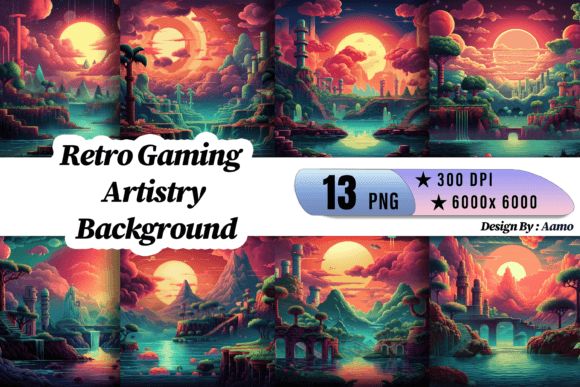
At its core, Retro Gaming Artistry Background is a curated collection of 13 high-definition images, each meticulously crafted to embody the spirit of classic arcade and console gaming. Unlike generic stock photography or abstract digital designs, these visuals are built from pixel art—a deliberate artistic choice that instantly triggers recognition among anyone who grew up with 8-bit and 16-bit eras. The collection doesn’t attempt to mimic modern graphics; instead, it leans into the limitations that defined early gaming visuals: limited color palettes, blocky silhouettes, and chunky textures. Yet, because the files are delivered in high resolution, the pixel details remain crisp rather than blurry when scaled, giving you both the nostalgic texture and the clarity needed for contemporary displays.
What separates this set from a random download of retro-themed images is its cohesion. All 13 images share a consistent visual language—a mix of neon-lit cyberpunk alleys, fantasy game maps, dungeon interiors, and vibrant starfields. This harmony means that when used across a project, they create a unified atmosphere rather than a patchwork of disparate styles. For designers, streamers, or content creators evaluating background options, this internal consistency can reduce the time spent hunting for complementary visuals.
Where Retro Gaming Artistry Background Shines: Strengths and Best-Fit Scenarios
One of the most practical strengths of this collection is its ready-to-use nature. You’re not purchasing raw assets that require heavy editing; each image is composed as a full background, with balanced compositional weight that leaves natural spaces for overlaying text, avatars, or UI elements. This makes the set especially valuable for live streaming overlays, video title cards, or desktop wallpapers where readability is essential. For example, a Twitch streamer who builds a retro gaming channel can rotate these images as scene backgrounds, and the viewer will immediately sense the throwback identity without the creator needing to commission custom pixel scenes.
Another advantage lies in emotional engagement. Pixel art backgrounds tap into an audience’s sense of shared history. A blog post header using one of these backgrounds might hold a reader’s attention longer simply because the visuals spark familiarity. In social media campaigns, that kind of instant recognition can cut through the fast-scrolling noise. The 13-image count also offers enough variety to avoid monotony while remaining small enough to force a cohesive account aesthetic—a factor often overlooked when people download massive packs of disparate assets.
Practical Application Examples
- YouTube channel art and thumbnails: By blending a cropped section with bold sans-serif text, creators quickly signal retro gaming content without needing extensive Photoshop skills.
- Website hero sections: A pixelated cityscape behind a tagline instantly sets a nostalgic mood for indie game developers showcasing their portfolio.
- Printed merchandise: High-resolution files mean the same designs can work on T-shirts, mugs, or posters, translating the pixel look into physical goods that appeal to retro enthusiasts.
- Mobile wallpapers: The 16:9 or similar aspect ratios often fit phone screens well, and the high-definition output prevents ugly pixelation on retina displays.
How Retro Gaming Artistry Background Compares to Other Visual Approaches
When evaluating this collection against alternatives, it helps to understand what you’re trading off. The most direct comparison is with free retro wallpapers from community sites. While free options exist, they frequently come with inconsistent resolutions, watermarks, or mixed art styles that break visual flow. The deliberate curation behind Retro Gaming Artistry Background means you’re paying for reliability and a clean license, which can be critical if you’re producing commercial content that must avoid copyright risks.
Another popular alternative is AI-generated pixel art. Tools can now output retro-style backgrounds on demand, offering nearly infinite variety. The tradeoff, however, lies in the unpredictable nature of AI output: hands might melt, background details can warp, and maintaining a consistent character or color scheme across multiple images requires significant prompt engineering and manual cleanup. A handcrafted collection like this one gives you predictability. Every image was composed by an artist who intended the final composition to work as a background, so you’re less likely to encounter distracting artifacts.
On the opposite end, some projects call for photorealistic gaming screenshots or modern vector illustrations. Photorealism can be incredibly immersive but often clashes when combined with simpler UI elements or when used in a context where pixel art’s charm is the central draw. Vector backgrounds with clean gradients and sharp lines scale infinitely, but they lack the textured, lived-in feel that pixels provide. If your project is built around evoking the feeling of a 1990s cartridge game, the vector approach can feel too sterile—like a sanitized memory rather than the real thing.
Comparing Key Attributes Across Styles
- Pixel art collections: High nostalgia value, distinct aesthetic, but may feel dated if the audience expects modern minimalism.
- AI-generated pixel scenes: Endless variety, but inconsistent quality and potential licensing gray areas.
- Free stock photos of gaming setups: Realistic and relatable, but often too literal and lack the imaginative backdrop a pixel scene provides.
- Custom commission work: Perfectly tailored, but costs significantly more and adds lead time to your project.
When Retro Gaming Artistry Background May Not Be the Right Fit
Despite its charm, the collection has inherent limitations that can steer you toward other resources. The most obvious is limited quantity. Thirteen images might cover a small campaign or a personal brand refresh, but if you post daily content and need fresh visuals each time, you’ll exhaust the pack quickly. In that case, you might need a subscription to a design asset platform that provides hundreds of retro-themed vectors and wallpapers monthly, or you might combine this pack with additional purchased assets to build a larger rotation.
Another factor is stylistic rigidity. The entire collection lives within a fairly specific flavor of retro gaming: think late 80s to mid-90s arcade and home console looks. If your product or channel references early 2000s handheld games, or if you want a softer, watercolor-like nostalgia, this exact pixel style may misalign. The blocky, grid-based nature of pixel art backgrounds can also clash with contemporary UI elements that use smooth rounded corners and gradient overlays, creating a visual discord that bothers picky designers.
Licensing nuances matter too. While the collection is marketed for creative projects, always verify whether the terms allow use in commercial merchandise for resale, such as print-on-demand products. Some packs restrict redistribution even if physically printed. If you’re unsure and your business model depends on selling physical goods, opting for a pack with an explicit extended commercial license—or even royalty-free photography—might be the safer route.
Decision Factors to Weigh Before Choosing This Collection
To make an informed choice, consider these aspects specifically for your workflow:
- Output resolution: Verify the pixel dimensions of the HD images. If you’re designing for ultra-wide monitors or billboards, ensure the files scale up without excessive softness.
- Color palette consistency: The set likely uses a unified color range. If your existing brand colors clash with that dominant neon or muted tone, you’ll either need to recolor the images (which can alter the pixel art’s character) or accept the mismatch.
- File format and editability: Are they delivered as flat JPGs or layered PSDs? Layered files allow you to remove background elements or adjust lighting, making the pack far more versatile for designers who need customization.
- Your audience’s tech comfort: Pixel art resonates strongest with viewers who have a direct connection to retro games. A younger audience that never held a Game Boy might not feel the same pull, though the aesthetic can still resonate as “vintage cool” if framed well.
When the Collection Becomes the Clear Winner
There are specific scenarios where Retro Gaming Artistry Background outshines practically every alternative. If you’re launching a podcast about classic game music and need cover art that immediately communicates the subject matter, these backgrounds provide instant context that a generic waveform or microphone photo never could. Similarly, for a short-term event—a retro gaming tournament, a themed party invitation set, or a limited-run e-commerce shop—the pack offers a fast, cohesive visual identity without the overhead of hiring a designer.
Creatives who value artistic integrity over sheer volume also benefit here. Because someone deliberately composed each image with foreground, midground, and background layers that work as a complete scene, you get a professional-level foundation. This is especially noticeable if you compare a piece from the collection with a quick AI prompt result—the handcrafted image will likely have intentional negative space, guiding the eye to natural focal points where you can place text or logos without covering key visual elements.
Integrating Retro Gaming Artistry Background into a Modern Workflow
Once you decide this resource fits your needs, think about how to maximize its impact. Instead of slapping the image behind text and calling it a day, try subtle adjustments that bridge the gap between retro pixels and contemporary design trends. Adding a slight film grain overlay or a very mild lens blur mimicking CRT screen curvature can unify the pixel look with your overall visual direction. If you’re creating multiple variations for a social media carousel, cropping squares from different areas of the same wide background gives a connected feel while keeping each slide fresh.
For video content, gently animating a few pixel elements—like making stars twinkle or clouds scroll—turns a static background into a dynamic loop. Even a subtle glitch effect for transitions can reinforce the retro mood without overwhelming the main content. The key is to let the background support the foreground message, not compete with it.
Ultimately, Retro Gaming Artistry Background serves a specific function: delivering a concentrated dose of nostalgia-infused, ready-made pixel art scenes. It won’t replace a full asset library, and it shouldn’t be forced into projects where modern sleekness is paramount. But when your goal is to transport viewers to the pixelated corridors of memory, its focused curation, high resolution, and artistic coherence make it a strong contender worth considering alongside broader, less cohesive alternatives.