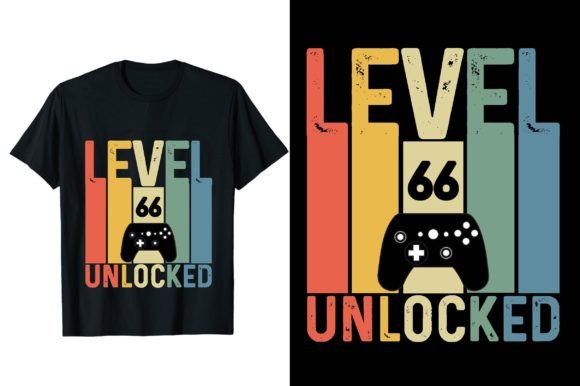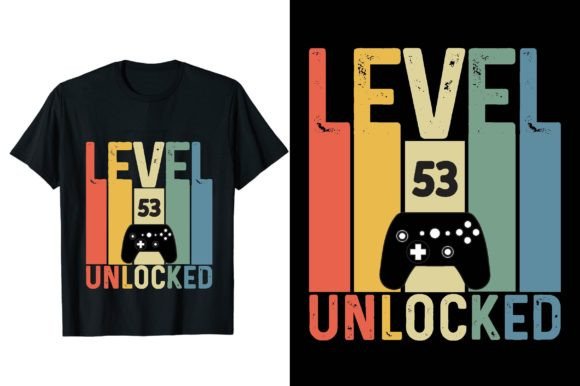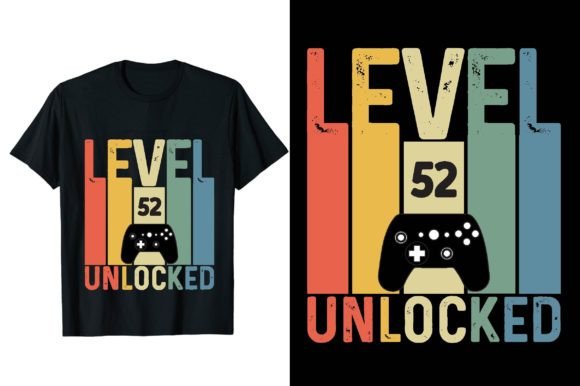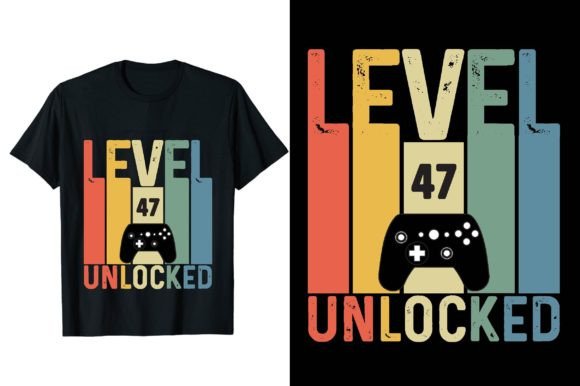
DAD LEVEL UNLOCKED Gaming T-Shirt: What You Need to Know Before Printing
If you have spent any time browsing gaming apparel or print-on-demand marketplaces, you have probably come across the DAD LEVEL UNLOCKED Gaming T-Shirt design. It is one of those concepts that connects instantly with a specific audience—gamers who are also fathers, or anyone who appreciates the humor of "leveling up" into parenthood while still holding onto their gaming identity. The phrase works because it is simple, relatable, and carries a bit of earned pride. But having a great design idea is only half the equation. How you bring it to life on a physical product determines whether people actually want to wear it, gift it, or display it.
This article covers what makes the DAD LEVEL UNLOCKED Gaming T-Shirt design work, where people tend to go wrong when sourcing or using these files, and how to avoid mistakes that lead to faded prints, misaligned graphics, or wasted materials. Whether you are a small business owner adding to your product line, a hobbyist making gifts, or a designer preparing assets for clients, understanding the details behind print-ready gaming artwork saves time and money.
What the DAD LEVEL UNLOCKED Gaming T-Shirt Design Actually Includes
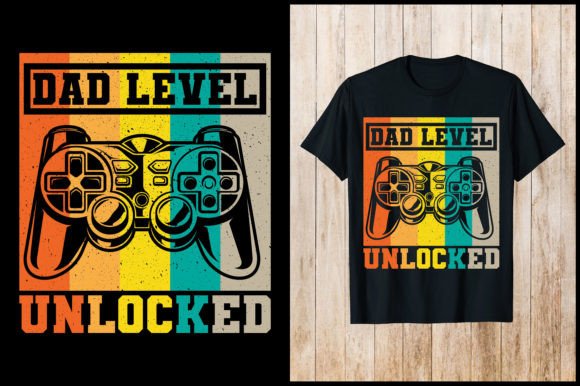
At its core, the DAD LEVEL UNLOCKED Gaming T-Shirt design is a typographic or illustrated graphic built around gaming culture and fatherhood. The phrase mimics the notification style of classic video games, where a player reaches a new milestone or achievement. Visually, it often incorporates controller silhouettes, pixel-style lettering, or bold gaming-inspired fonts. When you purchase or download a proper design bundle, you typically receive multiple file formats tailored for different production methods.
A well-prepared DAD LEVEL UNLOCKED Gaming T-Shirt package includes an AI file (Adobe Illustrator, fully editable), an EPS file (scalable vector for older software compatibility), and a high-resolution PNG file with a transparent background. The artboard dimension of 4500 by 5400 pixels is common because it provides enough resolution for large-format printing while maintaining sharpness on standard apparel sizes. You may also receive SVG cutting files for vinyl projects, and formats suited for sublimation printing on mugs, pillows, and other hard goods.
Many sellers market these as Gaming Sublimation Bundle, Sublimation Design, or SVG Cutting Files packs. The variety of terms can be confusing, but they generally point to the same core idea: a versatile graphic ready for multiple product applications.
Common Misunderstandings About Print-Ready Gaming Designs
One of the biggest mistakes people make is assuming that a single PNG file will work perfectly for every printing method. A PNG downloaded from a bundle might look crisp on screen, but if it lacks sufficient resolution or has a low DPI setting, the printed result on a t-shirt can appear blurry or pixelated. Screen display and physical printing have different requirements, and what looks acceptable at 72 DPI on a monitor often fails at the 300 DPI standard needed for quality apparel printing.
Another frequent oversight involves color profiles. Files created in RGB mode will not translate accurately to CMYK printing processes used by many commercial printers. The vibrant neon greens and electric blues that define a lot of gaming graphics can shift unexpectedly when converted. If you skip checking the color space before sending a design to production, you may end up with dull, muted colors that disappoint customers.
There is also confusion around the terms Gaming Vector, Gaming Silhouette, and Cut Files. A vector file can be scaled infinitely without quality loss, making it ideal for resizing across different products. A silhouette typically refers to a solid shape outline, often used for simple one-color designs or vinyl cutting. Cut files, usually in SVG or DXF format, are specifically structured for cutting machines like Cricut or Silhouette devices. Using the wrong file type for your intended method leads to wasted materials and frustration.
How File Format Mismatches Affect Your Final Product
Imagine you want to print the DAD LEVEL UNLOCKED design on a black t-shirt using direct-to-garment printing. You open the PNG file, which has a transparent background, and upload it. If the design contains fine details or thin lines, and the PNG was exported at a lower resolution, those details may break apart during printing. The result is a design that looks fine from a distance but appears sloppy up close.
Now consider sublimation printing on a mug. Sublimation requires high heat and pressure to transfer dye onto a polymer-coated surface. If you use a design with a solid white background instead of a transparent PNG, the white area transfers as well, creating an unintended white rectangle around your graphic. The mug looks amateurish. Knowing which file format to use for each application is not just technical trivia—it directly impacts the perceived value of your product.
For vinyl cutting, using an AI or EPS file when your cutting machine software expects an SVG can cause import errors, missing layers, or distorted paths. The design might cut incorrectly, wasting expensive heat-transfer vinyl. Taking five minutes to verify file compatibility before starting a project prevents hours of troubleshooting later.
Practical Advice for Choosing and Using Gaming T-Shirt Designs
Before purchasing or downloading a DAD LEVEL UNLOCKED Gaming T-Shirt Design bundle, check exactly which file formats are included. A quality package should list AI, EPS, PNG, and ideally SVG or DXF formats clearly. If the listing only mentions a single format without specifying resolution or vector capability, ask the seller for clarification. Reputable designers provide detailed file information upfront.
When preparing the design for printing, always confirm the resolution. Open the PNG in an image editor and check the pixel dimensions and DPI. For a 4500 by 5400 pixel artboard, the effective print size at 300 DPI is 15 by 18 inches—more than enough for any t-shirt print area. Resizing down is safe; resizing up beyond the native resolution introduces blur.
For sublimation projects, remember that the design must be mirrored before printing onto sublimation paper, especially when text is involved. A mirrored "DAD LEVEL UNLOCKED" reads correctly after transfer. Forgetting this step means your text appears backward on the final product, and there is no way to fix it once the sublimation process is complete. Make mirroring part of your pre-press checklist.
If you plan to use the design across multiple product types—t-shirts, mugs, pillows, tote bags—take advantage of the vector files. Open the AI or EPS file, group the elements you need, and scale to fit each product template without quality loss. This is far more efficient than trying to stretch a single raster image to fit different dimensions.
Design Quality and What to Look For
Not all Gaming Sublimation Bundle packs are created equally. Some designs are traced from low-resolution sources, resulting in jagged edges and uneven curves. Others may contain excessive anchor points that complicate editing or cause cutting machine lag. When evaluating a DAD LEVEL UNLOCKED design, zoom in on the edges. Clean vector artwork should have smooth, continuous curves without noticeable stepping or wobbling.
Check the typography as well. If the lettering appears stretched, unevenly spaced, or poorly kerned, the design will look unprofessional no matter how well you print it. Gaming-themed fonts are popular, but they need proper treatment to be legible at different sizes. A well-crafted design maintains readability whether it is printed large on the back of a shirt or small on a mug.
Color separation matters if you are screen printing. Designs with gradients, glows, or complex shading require halftone separations or simulated process printing, which adds complexity and cost. If you want a straightforward screen-printed result, look for designs with clear, solid color areas and minimal gradients. The simpler the color palette, the more cost-effective the screen-printing setup becomes.
Application Across Different Products
The versatility of the DAD LEVEL UNLOCKED theme makes it suitable for more than just t-shirts. On a mug, the design works as a morning coffee companion for gaming dads. On a pillow, it becomes a fun addition to a game room or man cave. For tote bags or hoodies, the graphic scales up nicely when using the vector source files. Each product type has different surface textures and color limitations, so testing on a sample before committing to a large production run is a smart practice.
When applying the design to dark-colored substrates, pay attention to the underbase requirements. Direct-to-garment printing on dark garments often needs a white underbase layer to make colors pop. If your design file does not account for this—meaning it lacks proper knockout or separation layers—the printer operator will need to adjust settings, which can introduce inconsistencies. Providing a print-ready file with appropriate layers shows professionalism and speeds up production.
For heat-transfer vinyl projects, the SVG Cutting Files included in many gaming bundles let you cut the design with precision. Weeding small details from intricate gaming graphics can be tedious, so consider how detailed the design is before choosing this method. Designs meant for vinyl cutting often have simplified, bold shapes that weed cleanly. If the DAD LEVEL UNLOCKED design has extremely fine lines or floating small elements, it may be better suited for sublimation or direct-to-garment printing instead.
Storage, Organization, and Avoiding Repeat Purchases
People who frequently work with print-ready designs often accumulate hundreds of files across multiple folders. Without a clear naming and organization system, locating the correct Gaming Graphic or Sublimation PNG file becomes a time-consuming hunt. Create a folder structure that separates designs by theme, and within each theme, keep vector files, PNG files, and cutting files in clearly labeled subfolders. Adding resolution or DPI notes to file names helps you quickly identify which version is print-ready.
It is also easy to accidentally purchase the same design bundle twice, especially when different sellers use similar preview images or slightly varied product titles. Keeping a simple spreadsheet or inventory list of purchased design packs, along with their included formats and licensing terms, prevents duplicate spending. Small business owners who maintain organized asset libraries save significant time during peak production periods.
Making Informed Buying Decisions
When browsing platforms for Gaming Shirts, Sublimation Bundles, or EPS Bundles, look beyond the mockup images. Mockups show how a design could look on a product, but they do not reveal the actual file quality. Read descriptions carefully for resolution specifications, included file types, and any usage restrictions. Commercial licenses matter if you plan to sell products featuring the design. Some bundles allow personal use only, while others include full commercial rights. Using a personal-use-only design on products you sell can lead to legal issues and marketplace takedowns.
Check if the seller provides support files or a help guide. Designers who include basic instructions for sublimation settings, cutting machine configurations, or color profile recommendations demonstrate attention to customer success. This support can be especially valuable if you are newer to printing or working with a particular production method for the first time.
The DAD LEVEL UNLOCKED Gaming T-Shirt concept has genuine appeal because it taps into a shared experience with humor and style. Getting the execution right—through proper file selection, resolution checks, and production method matching—turns a good idea into a product people enjoy wearing and using. Paying attention to these details separates polished, professional results from disappointing first attempts.